Harden the house. We will reprice the policy.
Australian property risk did not get worse because insurers said so. It got worse. The only honest response is to pay people to reduce it, then charge them less.
How the programme runs
Four steps, no cost to enter, and no requirement to hold a Wattle policy for the first two of them.
-
Ask for a report on your address
Give us a street address and we run it against bushfire, flood, wind, hail and soil data at property level. Six pages, in English, free, and yours whether you buy anything or not.
-
Pick the actions worth doing
The report ranks every action by what it costs against what it saves. Some of it is a Saturday with a ladder. Some of it is an engineer. Most people do the cheap half first.
-
Send us the evidence
An invoice, photographs, and where the work is structural, the sign-off your state requires. Use any contractor you like. We take no commission from anybody.
-
We recalculate the hazard rating
Not a marketing credit and not a loyalty discount. Your address is re-rated, the premium is rebuilt from it, and the new rating stays with the property when you sell.
Bushfire
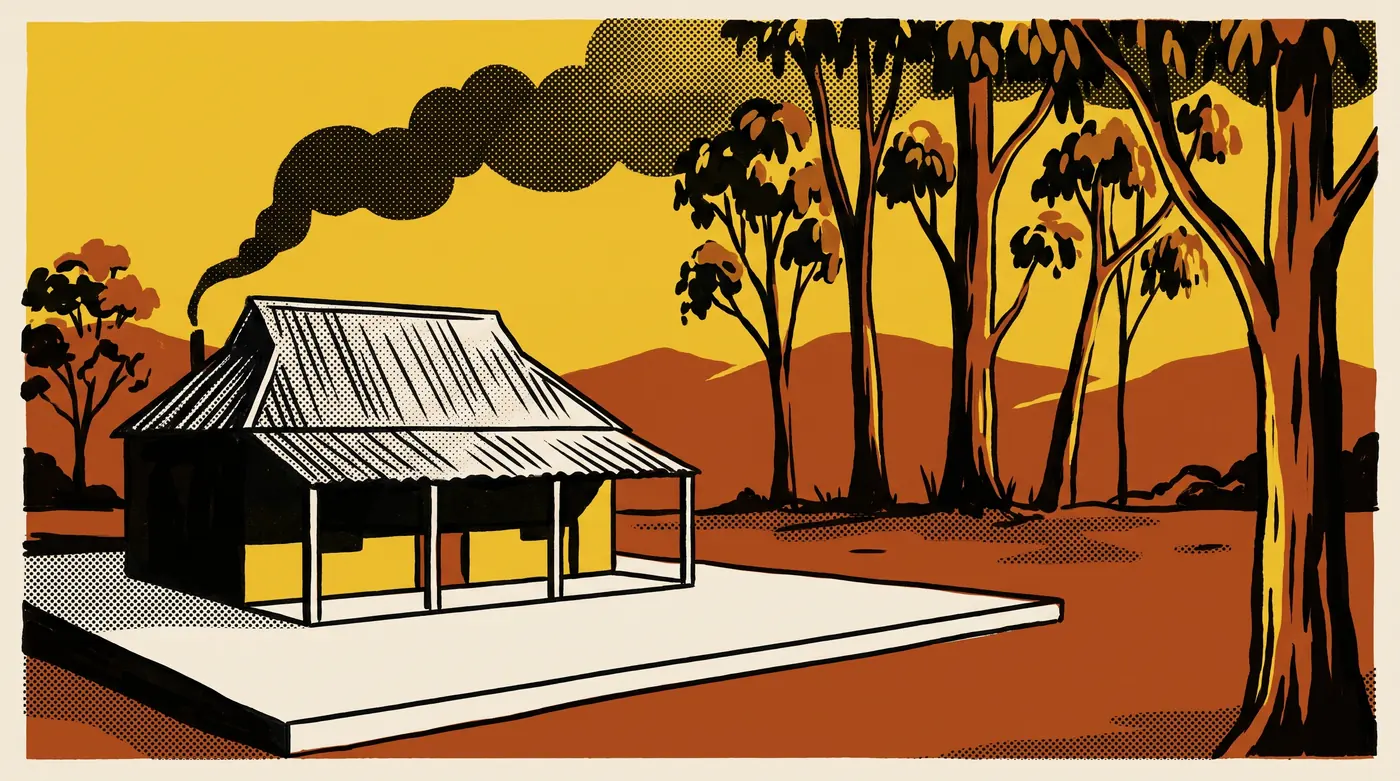
Bushfire risk at a property is measured as a Bushfire Attack Level, or BAL, running from BAL-LOW through BAL-12.5, 19, 29, 40 and BAL-FZ, the flame zone. It is set by vegetation type, slope and separation distance, and it decides both what your house has to be built from and what it costs to insure.
Most Australian homes lost to bushfire are not lost to a wall of flame. They are lost to ember attack, hours before or after the front passes, through a gutter full of leaves, an unscreened vent, or a gap under a deck.
What actually moves the number
- Ember guards on gutters, valleys and roof vents, and metal mesh no coarser than 2mm on every weep hole and subfloor vent
- Replace timber decking within six metres of the house with non-combustible decking, or enclose the underside
- Clear the gutters and the roof valleys every spring, and photograph them for us
- Move the woodpile, the gas bottles and the mulch beds outside a five metre non-combustible zone
- Screen or upgrade windows on the exposed elevations to toughened glass in a metal frame
- A static water supply with a fitting the local brigade can actually connect to
Effect on your premium. A verified drop of one BAL band typically moves a Wattle home premium by 8 to 14 per cent, and it stays with the property when you sell it.
Flood
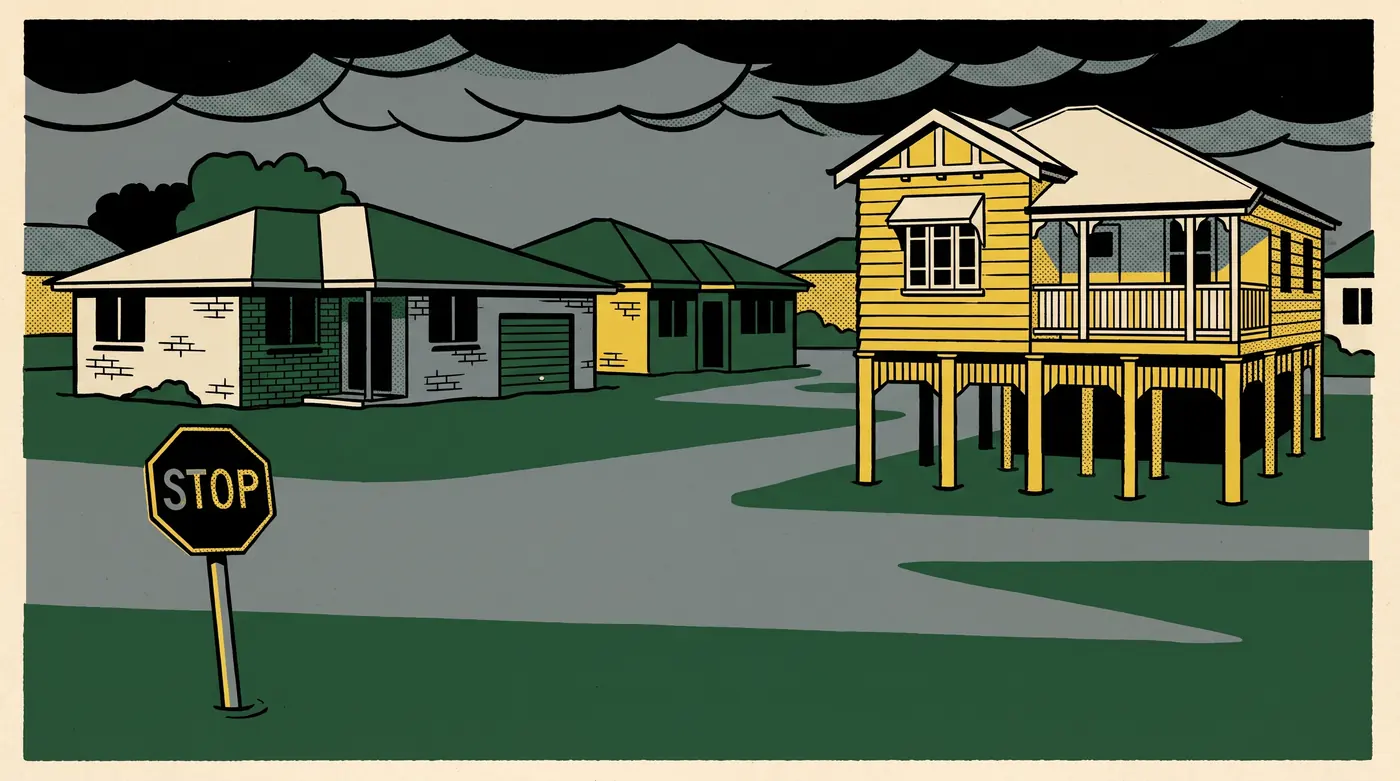
Flood cover in Australia uses one legislated definition, so every insurer means the same thing by the word. What differs is how each one reads your address. We use property-level ground height against the modelled flood surface, not the postcode and not the suburb.
A property outside the mapped overlay can still flood, and a property inside it may never have. The overlay is a planning instrument built from a modelled event. Your floor level relative to that surface is the number that actually prices the risk.
What actually moves the number
- Raise the switchboard, the power points and the data outlets above the modelled flood level
- Replace plasterboard below that level with flood-resilient linings such as fibre cement or magnesium oxide sheet
- Move the hot water system, the pool pump and the air conditioning condenser onto a raised plinth
- Fit non-return valves on the sewer and stormwater connections
- Where the house is on stumps, keep the undercroft clear rather than enclosing it into habitable space
- Keep a written flood plan with the two things you would move first, and where they go
Effect on your premium. Raised services and resilient linings together commonly reduce an at-risk home premium by 10 to 18 per cent, because they cut the cost of the claim rather than its likelihood.
Storm and hail
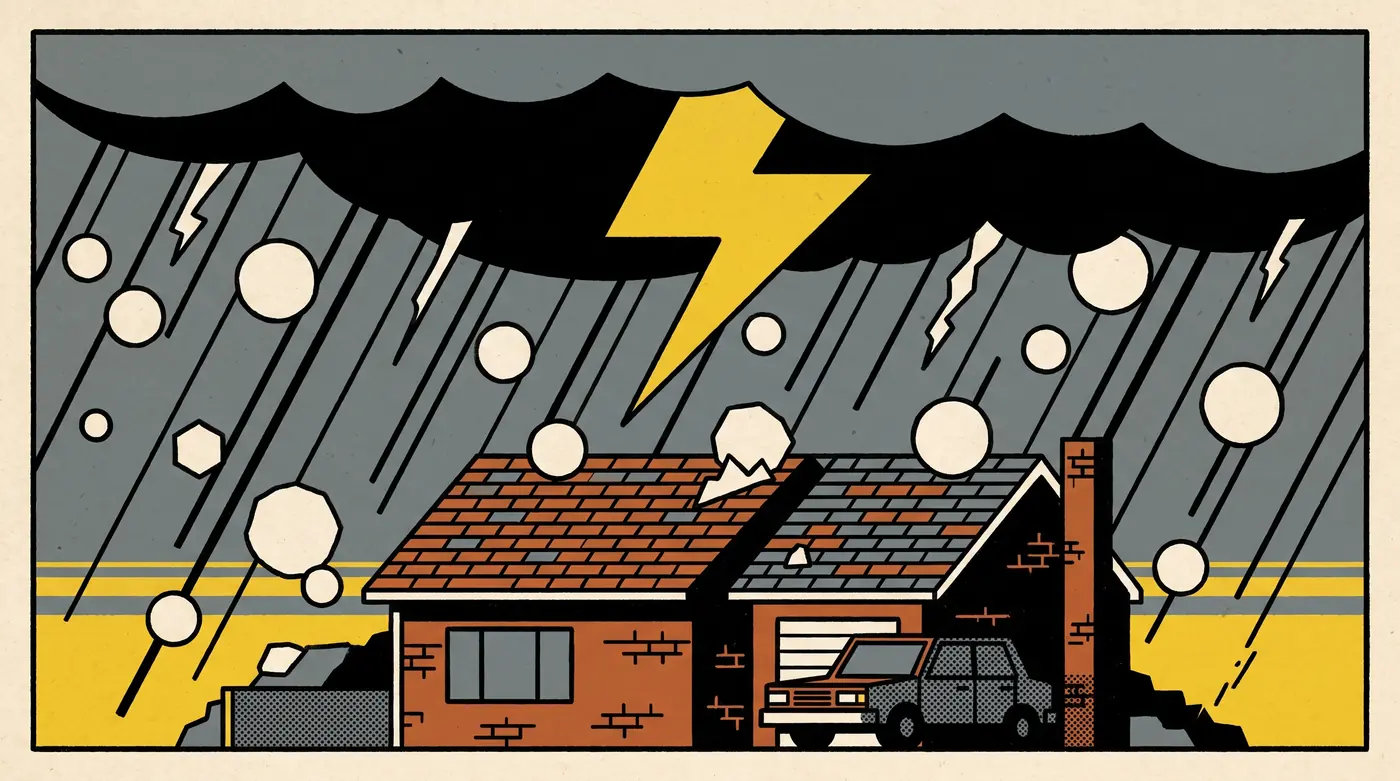
Storm and hail is the most frequent claim in Australia by a wide margin, and the one most people underestimate because a single event rarely destroys a house. It puts holes in it, and then rain does the expensive part over the following week.
The failure sequence is almost always the same. Hail bruises tiles or dents sheeting, a whirlybird or a ridge cap lifts, and the water that follows ruins the ceilings, the insulation and the switchboard. The roof is the cheap part of that claim.
What actually moves the number
- Replace spinning whirlybirds with sealed vents, which are the single most common entry point we see
- Have the ridge capping re-bedded and re-pointed on a tiled roof every ten to fifteen years
- Fit gutter guard sized for the local leaf litter, and check the downpipe capacity against the roof area
- Remove or crown-thin the overhanging limbs within a fall radius of the roof and the driveway
- Park under cover where you can. Hail totals more vehicles per event than any other peril
- Photograph the roof from a drone or a ladder once a year so a claim starts with a before picture
Effect on your premium. Sealed vents, re-bedded ridge capping and documented annual roof checks reduce a Wattle home premium by 5 to 9 per cent in the hail belt.
Cyclone
North of the Tropic of Capricorn, cyclone changes the whole shape of a policy: the waiting period, the building standard, the excess structure and the price. Anything built to the current standard in a cyclonic wind region behaves very differently from anything built before 1982.
Older north Queensland housing fails at the connections, not in the middle of the members. Roof sheeting lifts off the battens, the battens lift off the rafters, and once the roof is gone the internal pressure takes the walls.

What actually moves the number
- Have a structural engineer verify the roof tie-down chain from sheeting through to footing, and fix the weakest link
- Fit cyclone shutters or compliant impact screens to every opening on the exposed elevations
- Replace the roller door on the garage with a cyclone-rated one, because a failed door pressurises the house
- Secure or remove anything in the yard that becomes a missile: trampolines, shade sails, loose sheeting
- Trim palms and large limbs before the season rather than during it
- Know your evacuation zone and the two routes out of it that are not the highway
Effect on your premium. A verified tie-down upgrade plus compliant shutters is the largest single reduction we write, commonly 15 to 22 per cent on a cyclonic-region home.
Drought and ground movement
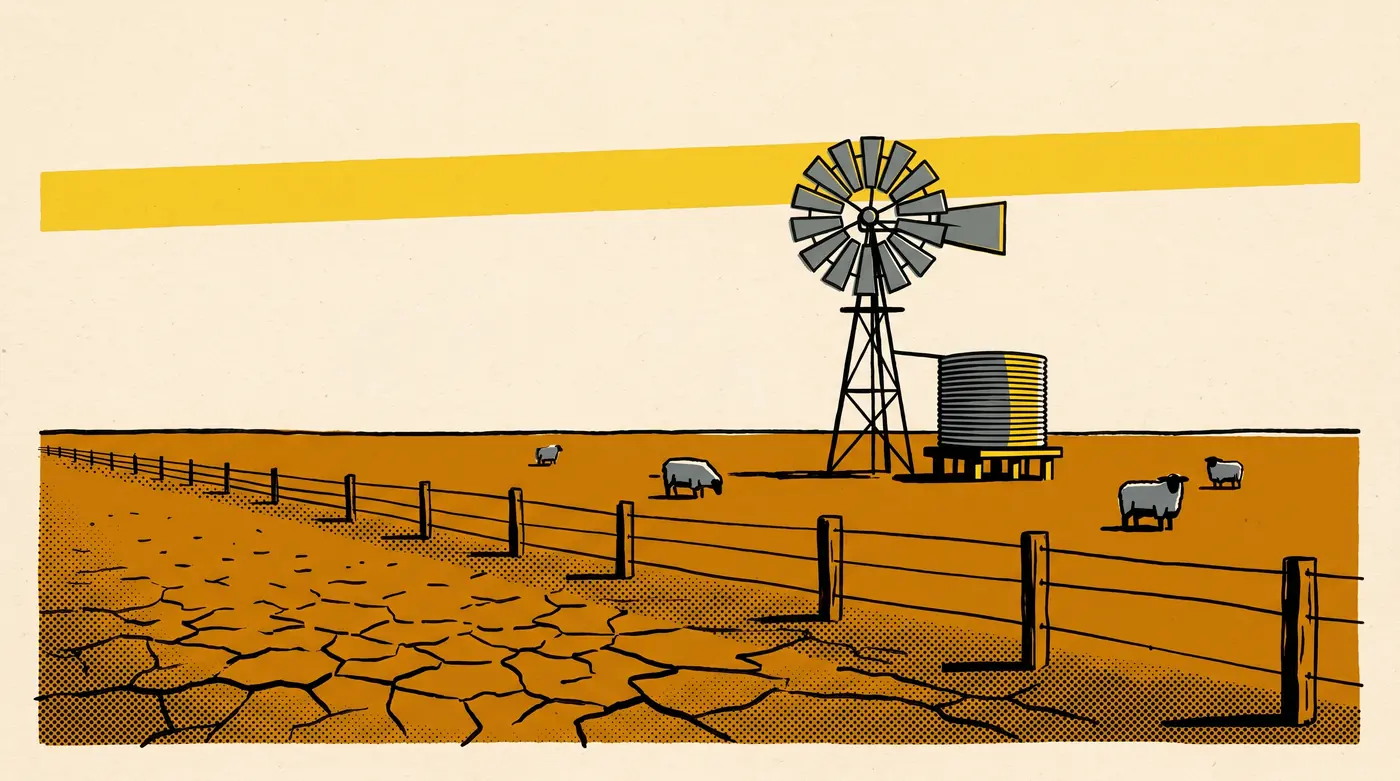
Drought itself is not an insurable event, and no Australian general insurer covers it. What is insurable is the damage that follows it: reactive clay soils shrinking under footings, and the fire risk that a dry landscape creates.
On reactive clay, a long dry followed by a wet season moves footings enough to crack brickwork and shear plumbing. Sudden ground movement can be covered. Gradual movement never is, in any policy sold in this country.
What actually moves the number
- Keep soil moisture even around the footings with a properly maintained perimeter drain rather than a sprinkler
- Do not plant thirsty trees within their mature height of the house on reactive clay
- Repair leaking stormwater and sewer connections quickly, since a slow leak under a slab is the classic cause
- Fit articulation joints where an engineer recommends them on a long masonry wall
- Keep the fodder stack, the fuel and the hay away from the sheds you cannot afford to lose
Effect on your premium. There is no drought discount, because there is no drought cover. Fire mitigation on a dry property does reduce the farm pack premium, typically by 6 to 11 per cent.
Questions about the programme
How does the resilience discount work?
Complete an eligible mitigation action, send us the evidence, and we reprice the policy at your next renewal. Roof tie-down upgrades, ember guards on gutters, raised switchboards and electrical, cyclone shutters and compliant flood-resilient internal linings all qualify. The reduction is a real repricing of your hazard rating, not a marketing credit, and it stays with the property.
What is in the free property risk report?
A property-level read of five hazards at your exact address: bushfire attack level, flood surface against your ground and floor height, hail frequency, wind region and soil reactivity. It lists the mitigation actions that would move each one, ranked by what they cost against what they save on your premium. It runs to about six pages, it is written in English rather than in modelling language, and you get it whether or not you buy anything from us.
Do I have to use your builder or your contractor?
No. Use anyone you like. What we need is evidence: an invoice, photographs, and where the work is structural, a form 16 or the equivalent sign-off in your state. We do maintain a list of contractors who have done this work before in each region, which we will send you if you ask, and we take no commission from any of them.
Does the reduction apply straight away?
It applies at your next renewal, because that is when the policy is repriced. Send the evidence at any point during the year and we hold it on file. If the work is substantial and you would rather not wait eleven months, ring us and we will cancel and rewrite the policy at the new rating, with the unused premium credited across.
Percentage effects quoted on this page are illustrative figures written for a demonstration site. They are not a rate table, and no cover is offered here. Read the PDS and TMD before deciding on any real product.
Get the report before you get the quote
Send us an address. Six pages on what your property is actually exposed to, and what it would take to change that. Free, and yours to take to any insurer.